

As you’ve noticed, soy wax has exploded on the candle making scene as have other alternative waxes. But the age old paraffin wax rebranded as ‘mineral wax’ is still widely used today, even amongst opulent brands.
If you’d like an objective, unbiased take on the pros and cons of soy wax vs paraffin wax, read on to explore not just popular mainstream beliefs but perhaps lesser known facts too.
So that you can get to the nitty gritty without further ado, below is a comparison table. But feel free to read on for a more in depth look.
Table of Contents
Features table
| Feature | Soy Wax | Paraffin Wax (Mineral Wax) |
|---|---|---|
|
Source |
Derived from the oil of soybeans, a renewable resource. |
A byproduct of the refining of petroleum – a fossil fuel and a non-renewable resource. |
|
Environmental Impact |
Biodegradable, with lower carbon footprint when locally sourced; concerns over deforestation and water use in large-scale farming. |
Higher carbon footprint, Is much less biodegradable. Made from left over waste product from the refinement of crude oil which releases CO2 into the atmosphere |
|
Safety and Health |
No known toxins released when burnt. |
Refined types can burn cleaner; non-refined types may release volatile organic compounds (VOCs). |
|
Scent Throw |
Gradual scent throw, due to its higher density, releases fragrance slower but with compatible essential oils and appropriate wick, fragrance can be strong. |
Stronger scent throw due to lower density; effective at dispersing fragrance quickly. |
|
Burning Time |
Lower melting point. Doesn’t need as much heat to melt, therefore burns for longer. |
Higher melting point, burns quicker and vaporises at higher rate. But other factors such as a wider wick can solve this issue. |
|
Cost |
Generally more expensive due to production costs. |
Less expensive, widely available although major brands with high quality oils can be expensive. |
|
Ease of Use in Candle Making |
Can be challenging for beginners, prone to frosting and may not always bind well with dyes and fragrances. |
Easier to work with; achieves a smooth finish and binds well with colours and scents. |
|
Sustainability Controversies |
Sustainable if responsibly sourced. Issues with large-scale agriculture practices; deforestation in some regions. |
Improvements in refining reduce environmental impact when burnt but does not change the reliance on fossil fuels. |
|
Refinement and Processing |
Relatively simple processing from soybean oil to wax. |
The direct byproduct from refining petroleum is slack wax. Paraffin wax is derived from slack wax by removing the oil via crystallization and filtration. |
Terminologies
Carbon Footprint – Total amount of carbon dioxide and greenhouse gases released from everyday economic and human activity contributing to climate change.
Renewable resource – A resource that can replenish itself over time by natural processes, causing much less environmental impact.
Sustainable – In order for something to be sustainable, it needs to be renewable and replaced at a speed that matches or exceeds how fast we use them up. Sustainability ensures the resource in question is managed responsibly.
Refinement – The transformation of a product by purification and distillation through heating with regards to crude oil (petroleum).
VOC – Volatile Organic Compounds. Vast quantities of VOC have been associated with adverse health effects.
Low melting point wax – melts at a lower heat.
Fossil Fuels – Substances such as coal, petroleum and natural gas are fossil fuels containing hydrocarbon. When burnt to produce energy, they release a large amount of carbon dioxide into the environment, being the primary source of climate change.
Crystallization – When a solution is heated, solvent evaporates, leaving a saturated solution where no more solid can dissolve. Upon cooling, crystals form and can be separated via filtration.
FAQs
Can soy wax and paraffin wax be blended together?
Yes. This blend achieves a stronger scent throw from the properties of paraffin wax, while enjoying a more even, longer burn of soy wax. It is a good compromise of environmental friendliness and fragrance delivery.
How do burning times compare between soy wax vs paraffin wax?
Generally, soy wax candles are denser with a lower melting point therefore melts at lower heat. This allows for a longer burning time.
You may find a soy wax candle lasts 30-50% longer than paraffin, depending on candle’s size and wick type.
However, paraffin wax candles may also be capable of lasting longer if the appropriate wick is used, allowing for better control of burning.
Does the type of wax affect the quality of scent?
The chemical composition of paraffin wax means that it releases scent quicker when burnt as it is lighter than soy wax and less dense. Soy wax tends to release scent more gradually, as it retains the fragrance oils in its structure.
However, it is important to note that the fragrance release is not solely dependent on the wax type, but the quality and volume of the fragrance or essential oils. Wick length and material also play an important role on how well the scent is drawn up.
How safe is paraffin wax?
Unrefined paraffin wax has been known to release VOC’s when burnt including toxins like toluene and benzene. Inhaled over a long period and in poorly ventilated areas, these substances can and be harmful.
But recent studies have shown fully refined paraffin wax – which is what luxury candle brands use, never exceed the allowable amounts of these toxins. The type of wax that emits a higher concentration of such chemicals – exceeding the allowable levels, is called slack wax which is rarely found in the candle making industry in recent years.
These days, the soot that is sometimes produced whether paraffin or vegetable/soy wax is due to incomplete combustion and with regular wick trimming, this is kept under control.
In one publication, researchers tested a scented paraffin candle in different sized rooms using special tools to measure substances released into the air. They found some chemicals like benzene were produced but after four hours of burning, the levels were less than half of what the World Health Organisation recommends for indoor air quality.
On the other hand, paraffin wax is an indirect by-product of petroleum and during the oil refinement process, toxic gases are released into the air making it unsafe for the environment.

Some would argue however, paraffin is obtained from the waste product of a process that happens anyway i.e. during the burning of fossil fuels for energy.
How safe is soy wax?
In some instances, for a candle to claim it is made of soy wax blend, it only needs to boast 51% of soy and the remaining 49% can potentially be made of paraffin. You may find some manufacturers follow this guidance, in order to create an effective scented candle that ticks all the boxes.
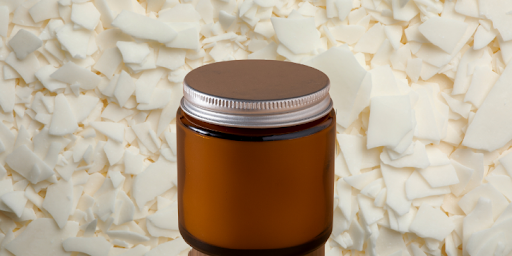
But is Soy wax safer? Generally speaking, soy wax is considered non-toxic and much safer. It is a vegetable wax and when burnt, there are no known harsh toxins released.
BUT, if you suffer from allergies, it may not be enough to ensure your candle is made of soy. The quality and percentage of the fragrance oils may also play a pivotal role.
If you are predisposed to hypersensitivities, natural essential oils that agree with you are advised over synthetic oils, regardless of type of wax used.
How do soy wax vs paraffin wax stand in terms of sustainability?
In regards to sustainability, soy wax wins due to its renewable origins—soybeans can be continuously grown, ensuring a consistent supply without depleting natural resources IF responsibly sourced.
If the manufacturers are cagey about their source, concerns could include the impact of soybean cultivation on deforestation and biodiversity loss.
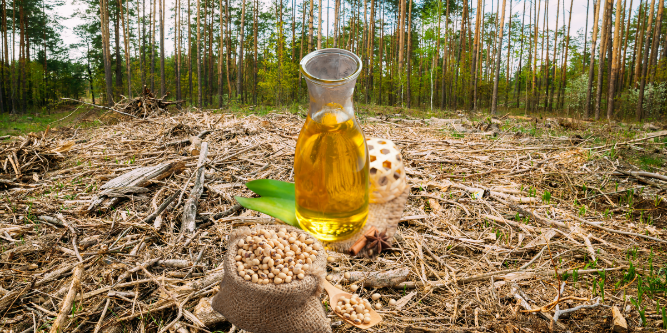
There are also issues regarding genetically modified organism (GMO) soybean. In which case, you can seek organic certified products and specifically, non GMO options.
Having said that, research suggests that although the soybean is genetically modified, the soybean oil which is the part used for the wax, is free from GM materials due to the separation process.
Paraffin wax on the other hands is not sustainable as it relies on the availability and extraction of crude oil, a finite non-renewable resource, posing significant environmental challenges.
Which is better for ease of candle making?
Paraffin wax is known to generally be easier to work with for beginners. It has a predictable melting point and a forgiving nature in terms of achieving a smooth finish.
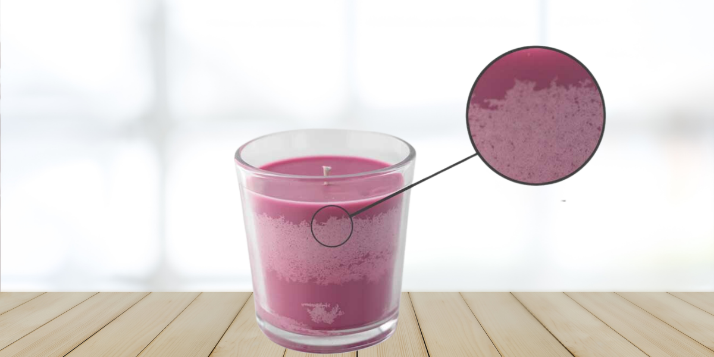
Soy wax can be a bit trickier as it sometimes creates an uneven surface during candle making, causing frosting (crystallised wax as it cools and hardens) and can be temperamental with some dyes and fragrances. But the size of the candle and material and length of wick also play a mighty role.
Final Thoughts
Although mass produced candles are still made of paraffin wax, more and more candle makers are opting for a blend of paraffin (mineral) and alternative waxes.
But our choices and opinions vary beyond measure. For vegans, beeswax is a big no, as bees are considered to be exploited in its production.

But paraffin is considered vegan, as is soy wax.
For some, the thought of potential deforestation caused from irresponsible soybean cultivation causes two raised eyebrows and a ‘whaaaaat?’, urging us to read the small print.

For others, as paraffin is a byproduct of crude oil’s purification process for energy, which otherwise goes to waste, this seems fairly acceptable.
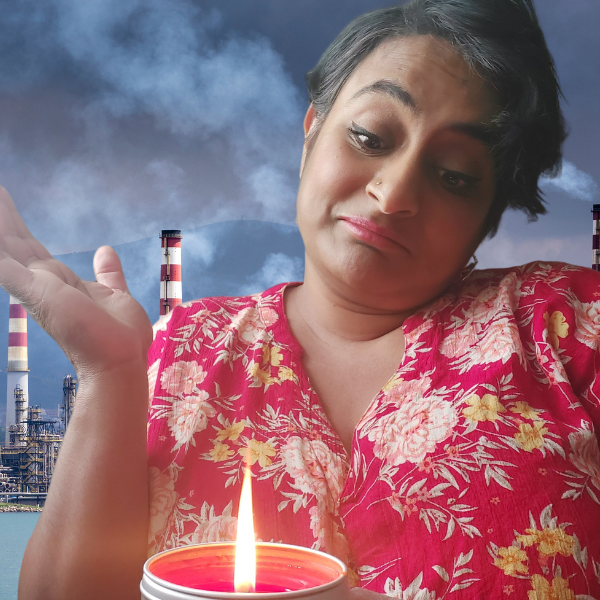
And for a fair few of us, as long as it’s a beautiful smelling candle and doesn’t pose too much of a risk, we don’t mind what it’s made of.

It seems the jury’s out. As with many of life’s offerings, things are not so black and white. Yet, armed with a bit of knowledge, you can rest assured you reap the pleasure of scented candles whilst aligning with your unique stance in today’s complex world.
Sources
fully refined paraffin wax 0.5% oil content | fully refined paraffin wax (paraffinwaxco.com)
Melting Point Factors for Common Waxes | Blended Waxes
Open Access proceedings Journal of Physics: Conference series (iop.org)
Are Soy Candles Safe – 10 top safety tips included (greenerlyfe.com)
Are Soy Wax Candles good? – British Wax